Overview of Major Offshore Wind Projects Worldwide

Major offshore wind projects are reshaping electricity systems from the North Sea to the Asia-Pacific and emerging U.S. markets. Their importance depends on more than headline capacity: location, turbine technology, seabed conditions, grid connection, supply-chain readiness, financing, and development status all determine whether a project can deliver power at scale.
This overview compares operating, under-construction, approved, and proposed offshore wind farms. Figures and schedules can change as developers revise designs, secure permits, or respond to market conditions, so project status should always be checked against current information from developers, regulators, and national energy agencies.
What Defines a Major Offshore Wind Project?
A major offshore wind project combines large turbine capacity, extensive marine infrastructure, substantial investment, and strategic importance for a regional electricity system. Its development stage matters just as much as its proposed size.
Capacity is usually described in two ways. Turbine capacity refers to the output of each machine, while project capacity is the combined nameplate rating of all turbines. A 15-megawatt turbine, for example, contributes 15 megawatts to a project’s nameplate capacity, although actual annual generation varies with wind speed, availability, and transmission constraints.
Useful comparison criteria include:
- Scale: total megawatts or gigawatts, turbine count, and the physical area covered.
- Technology: fixed-bottom foundations, floating platforms, turbine size, offshore substations, and export-cable design.
- Location: wind resource, water depth, seabed geology, ports, shipping routes, fisheries, and nearby demand.
- Commercial maturity: operating, under construction, approved, in development, leased, or proposed.
- System role: support for renewable energy targets, industrial policy, energy security, or cross-border electricity trade.
A proposed 10-gigawatt development is therefore not equivalent to an operating 1-gigawatt offshore wind farm. Treating both as delivered capacity is one of the most common ways offshore project comparisons become misleading.
Leading Offshore Wind Projects in Europe
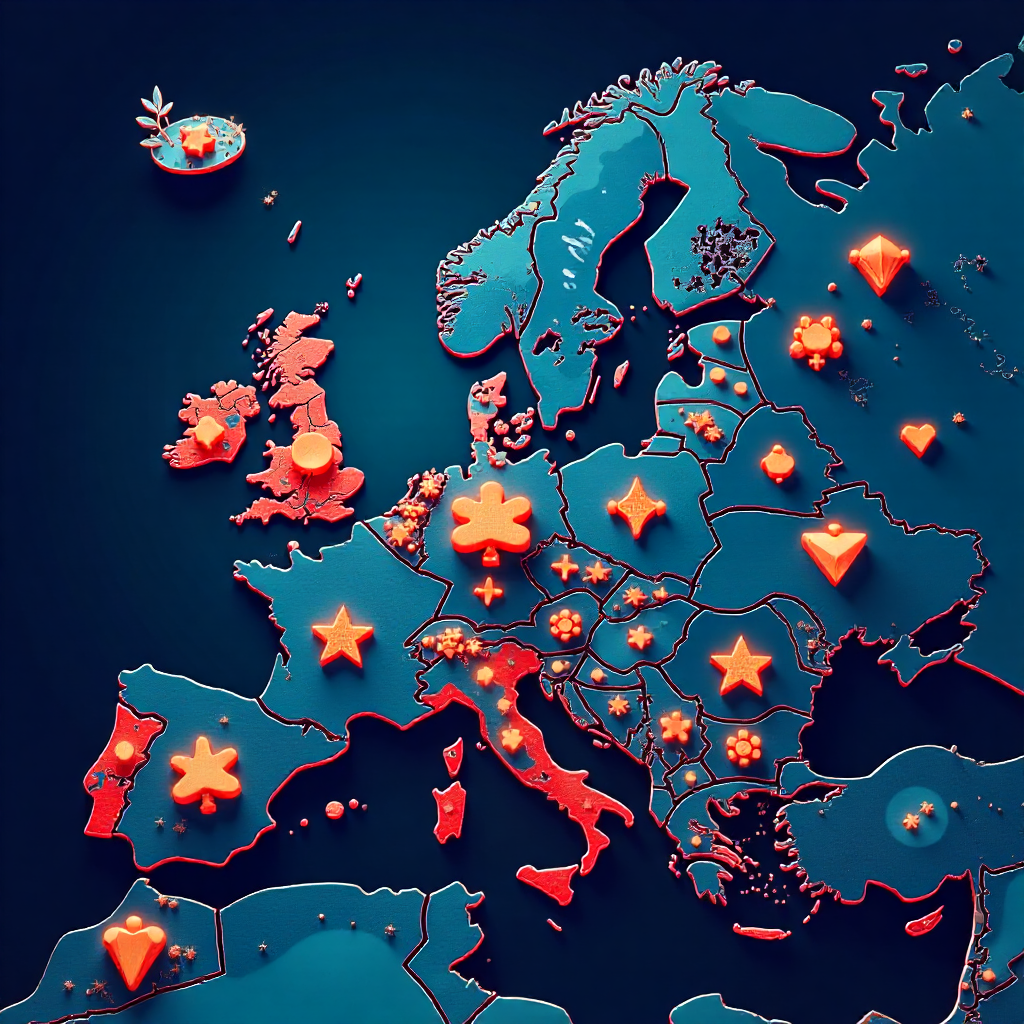
Europe remains a leading offshore wind region because the North Sea has strong wind resources, established ports, experienced developers, and a mature offshore wind supply chain. Projects range from operating arrays to large planned zones linked to national renewable energy targets.
North Sea scale and interconnection
The United Kingdom’s Hornsea developments off Yorkshire demonstrate the scale of modern fixed-bottom wind farms. Hornsea 1 entered operation with a capacity of 1.2 gigawatts, while Hornsea 2 added a further 1.3 gigawatts. Together, they show how large turbine arrays can support decarbonization while requiring extensive export cables, offshore substations, and port logistics.
The Dogger Bank project, also in the North Sea, is being developed in phases with a planned total capacity of 3.6 gigawatts. Its distant location provides access to strong winds but increases the importance of long-distance transmission, installation planning, and maintenance access. The project illustrates a recurring trade-off: moving farther offshore can improve wind conditions and reduce some coastal conflicts, while raising cable, vessel, and operations and maintenance requirements.
In the Netherlands, Borssele and Hollandse Kust projects helped establish a repeatable model for offshore wind lease areas, standardized tendering, and connections coordinated by the transmission system operator TenneT. Denmark’s Horns Rev and Kriegers Flak projects add experience in Baltic and North Sea conditions, including cross-border electricity exchange through the Combined Grid Solution.
Germany’s North Sea projects, including large arrays in the German Bight, connect offshore generation through a coordinated transmission network. Belgium’s North Sea developments and France’s Saint-Nazaire offshore wind farm extend the European market beyond the North Sea. These projects matter because Europe is gradually moving from individual wind farms toward integrated offshore grids and potentially energy islands.
WindEurope’s offshore wind statistics provide current regional figures, while national regulators remain the best source for project approvals and construction updates.
Major Offshore Wind Projects in Asia-Pacific
Asia-Pacific is expanding offshore wind through a mix of very large fixed-bottom projects, industrial-scale manufacturing, and early floating developments. China leads deployment by volume, while Taiwan, Japan, and South Korea are testing different approaches to seabed access, industrial policy, and coastal electricity demand.
China has built extensive offshore wind capacity along its eastern and southern coasts, close to densely populated manufacturing and urban regions. Projects in Jiangsu, Guangdong, Fujian, and Zhejiang benefit from strong electricity demand and domestic turbine, vessel, cable, and foundation supply chains. China’s developments also include some of the world’s largest individual turbines and demonstrate rapid construction at a scale difficult to replicate in newer markets.
Taiwan has established a significant offshore wind pipeline in the Taiwan Strait. Projects such as Formosa 1, Changhua, and Greater Changhua use fixed-bottom foundations in areas with strong wind resources. Their development has required specialized installation vessels, local-content commitments, marine surveys, and careful coordination with fishing communities and shipping routes.
South Korea is pursuing large offshore wind zones off Jeollanam-do and other coastal provinces. The country’s strategy combines renewable energy targets with shipbuilding, heavy engineering, and export-oriented manufacturing. However, permitting, fishing activity, grid availability, and local acceptance can influence delivery timelines as much as turbine technology.
Japan faces deeper water and complex seabed conditions around many of its most attractive coastal areas. That makes floating offshore wind especially relevant. Projects such as Fukushima Forward and developments in Nagasaki and elsewhere have helped test floating platforms, mooring systems, and maintenance methods, although commercial-scale expansion remains more challenging than fixed-bottom construction.

Emerging Offshore Wind Projects in the United States and Other Markets
The United States and other emerging markets are moving from lease auctions and pilot projects toward commercial offshore wind farms, but most planned capacity should not be confused with operating generation. Permitting, port infrastructure, transmission, and commercial pricing remain decisive.
The first U.S. commercial-scale projects include South Fork Wind off New York, which began delivering power with a capacity of approximately 132 megawatts, and Vineyard Wind 1 off Massachusetts, a 806-megawatt project under construction in phases. Coastal Virginia Offshore Wind, developed by Dominion Energy, is another major fixed-bottom project designed to serve Virginia customers and provide experience with large-scale U.S. construction and operations.
Further U.S. projects have been proposed in lease areas off New York, New Jersey, Massachusetts, Maryland, and California. The Atlantic projects generally use fixed-bottom foundations, while California’s deeper Pacific waters require floating offshore wind. The U.S. market’s challenge is often institutional rather than resource-related: federal approvals, state procurement, vessel rules, port upgrades, transmission planning, and power purchase agreements must align.
Australia has strong wind resources and growing interest in offshore wind lease areas, particularly near Victoria and New South Wales. Development remains at an earlier stage than in Europe or China, with environmental assessment, consultation, and regulatory processes shaping the project pipeline. Brazil, India, and several other coastal markets are also assessing offshore wind potential, but announced capacity does not yet equal construction activity.
The safest comparison uses three labels: operating capacity, capacity under construction or with final approval, and proposed or leased capacity. That distinction prevents ambitious development targets from being presented as guaranteed supply.
Fixed-Bottom and Floating Wind Technologies
Fixed-bottom offshore wind uses foundations attached to the seabed, while floating offshore wind supports turbines on buoyant platforms anchored by mooring lines. Fixed-bottom systems are generally more mature and economical in shallower water; floating platforms open deeper sites but carry greater technical and cost complexity.
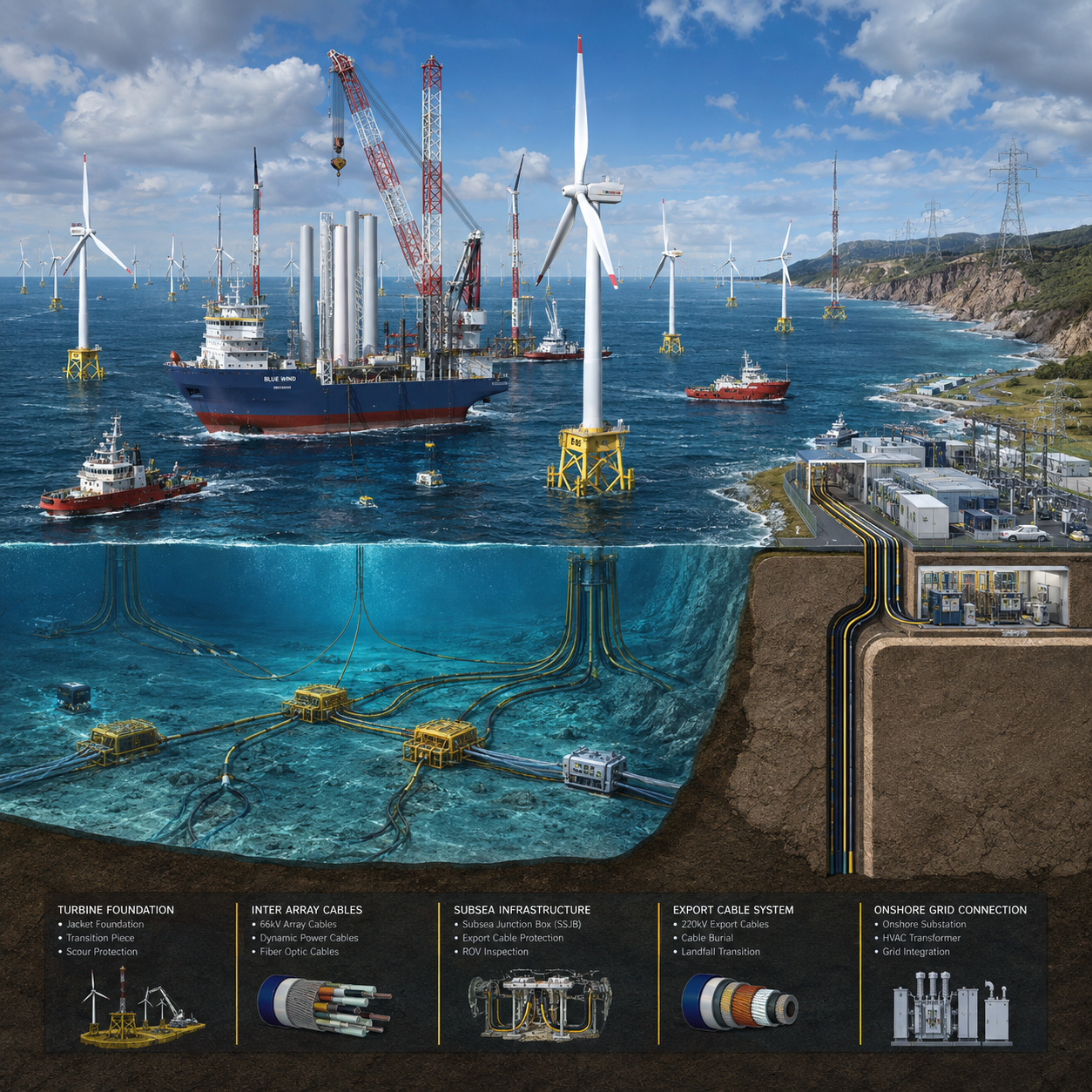
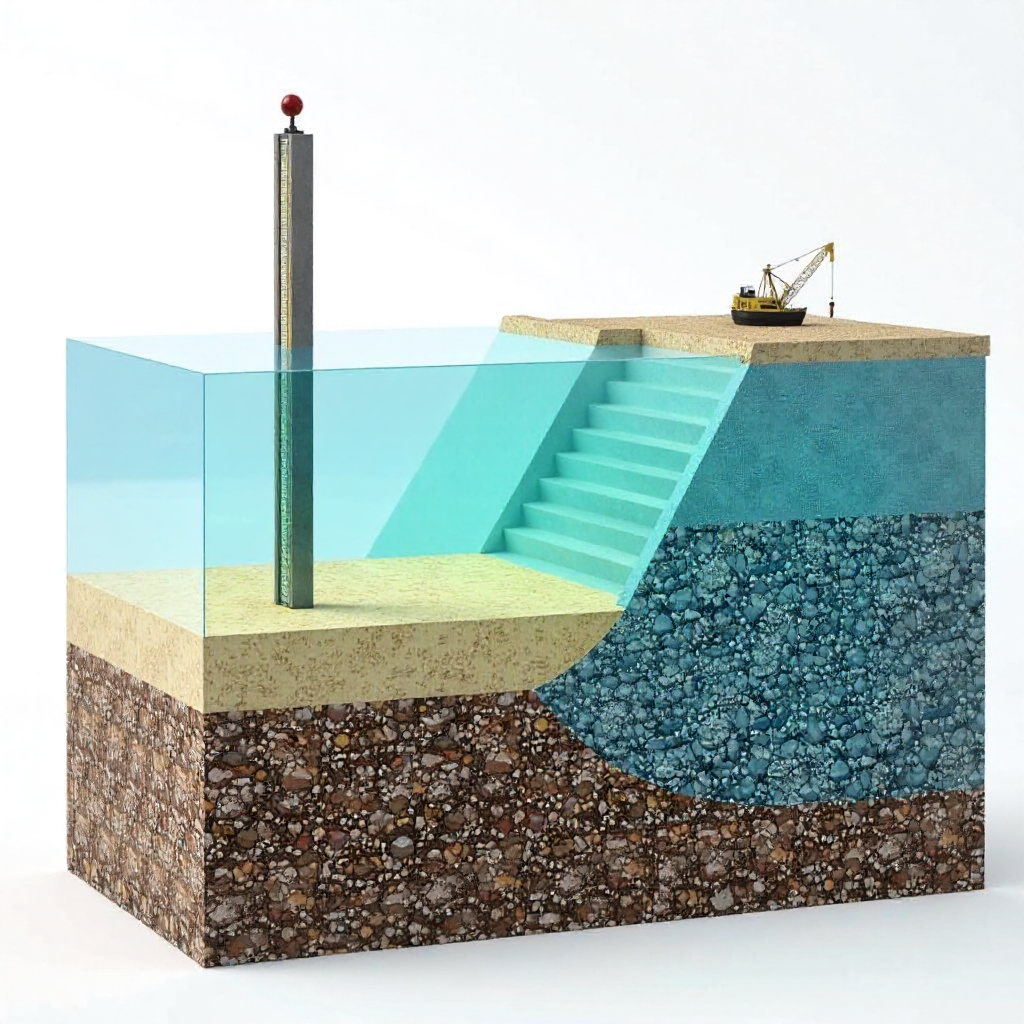
Monopiles are common in moderate water depths because they can be manufactured and installed at scale. Jacket foundations use a lattice structure and may suit deeper water or challenging seabed conditions. Turbines are arranged in arrays with spacing that limits wake losses, while inter-array cables collect electricity and carry it to an offshore substation.
Floating wind can use spar, semi-submersible, or tension-leg platforms. Components may be assembled in port and towed offshore, reducing dependence on very large installation vessels. The trade-off is substantial: floating projects need robust mooring systems, dynamic cables, specialized ports, and new inspection methods. Commercial floating wind is progressing, but it remains less standardized than fixed-bottom construction.
The technology choice follows a simple decision framework: depth, distance, seabed, and demand. Shallow water near a strong grid often favors fixed-bottom wind. Deep water near a major coastal load center may justify floating wind if the additional cost supports access to better wind resources or avoids land-use conflicts.
How Major Projects Connect to the Grid
Major offshore wind projects connect to the electricity grid through turbine arrays, offshore substations, high-voltage export cables, onshore substations, and transmission networks. A strong wind resource is valuable only when the generated electricity can reach consumers reliably.
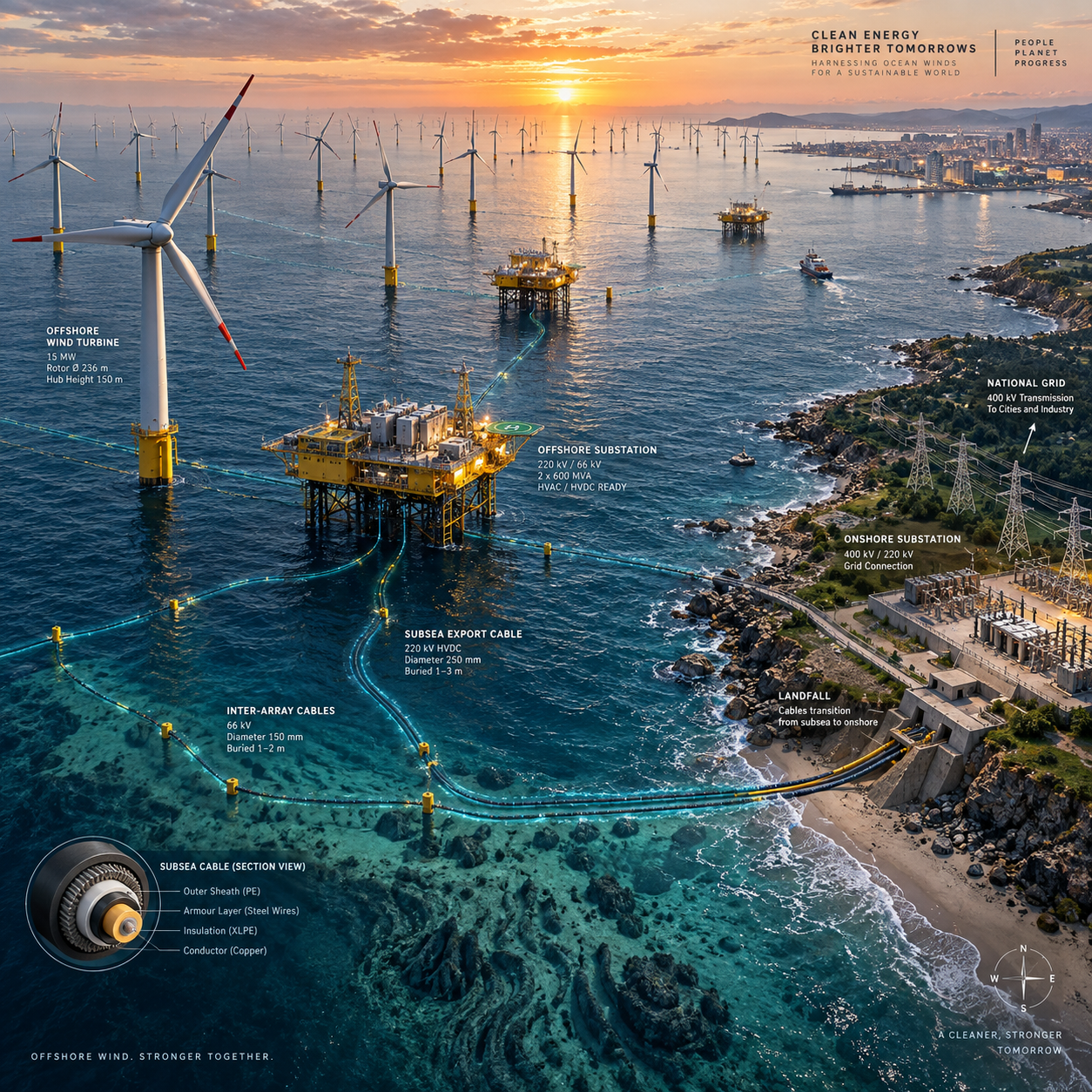
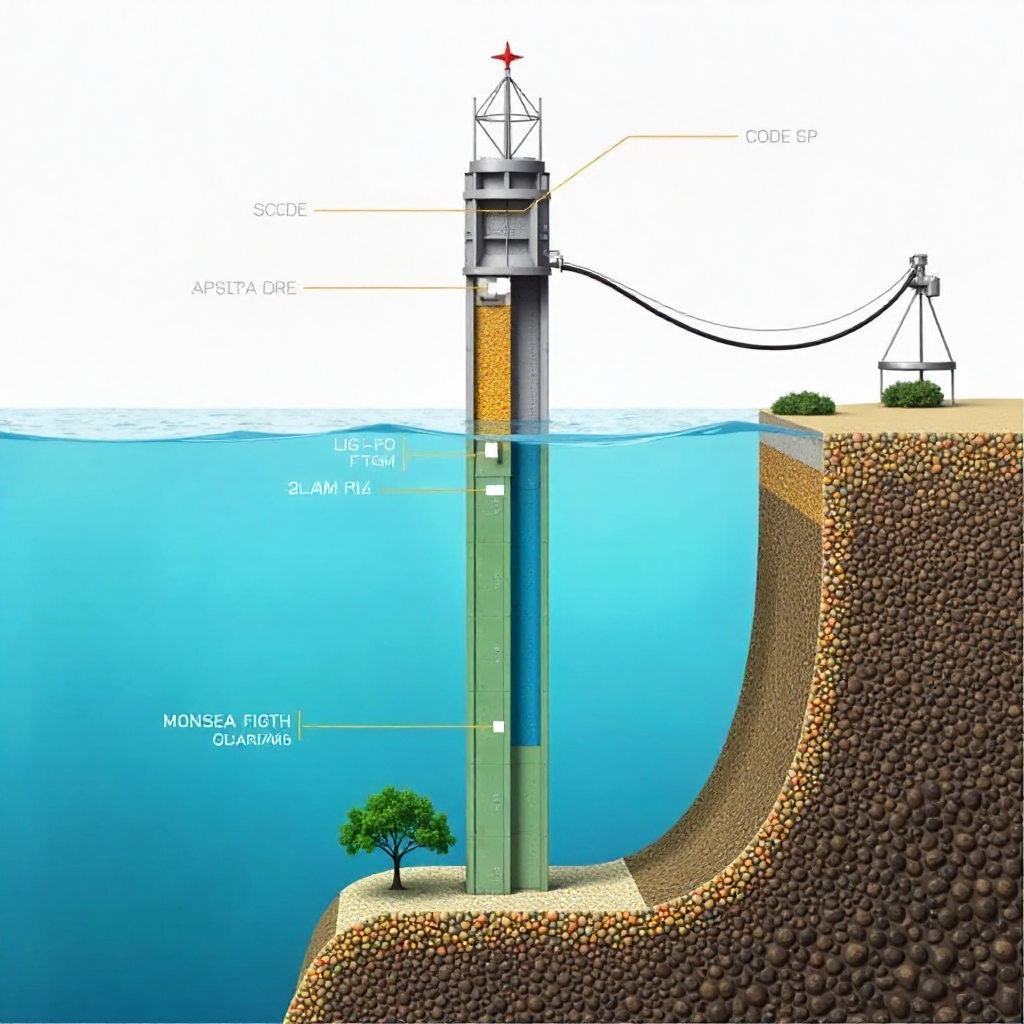
Electricity first travels through inter-array cables from individual turbines to an offshore substation. The substation increases voltage, reducing losses before power moves through one or more export cables. At the coast, an onshore substation converts and conditions the electricity for connection to the transmission system.
Projects may sell power through a utility power purchase agreement, a government-backed contract for difference, a merchant arrangement, or a combination of contracts. These structures affect financing because lenders need confidence that future revenue can cover construction, operations and maintenance, debt service, and unexpected cost increases.
Grid planning is becoming a central issue. Building one export connection per wind farm can duplicate infrastructure, while coordinated offshore transmission can share cables and substations across projects. Cross-border connections may improve system flexibility, but they require compatible regulations, market rules, and responsibility for balancing power when wind output changes.
Benefits, Challenges, and the Future of Offshore Wind
Offshore wind can reduce power-sector emissions, diversify electricity supply, support coastal jobs, and strengthen energy security, but its benefits depend on responsible siting, credible transmission plans, and projects that can be built economically.
Large offshore wind farms deliver several potential advantages:
- Strong and relatively consistent offshore winds can produce substantial annual electricity output.
- Projects can support renewable energy targets without using large areas of land for turbines.
- Ports, vessels, cables, foundations, and maintenance services can create industrial activity and skilled employment.
- Domestic generation can reduce exposure to imported fossil-fuel prices and supply disruptions.
The constraints are equally practical. Permitting can take years because projects must address fisheries, shipping, aviation, defense, marine mammals, birds, noise, cable routes, and coastal communities. Supply-chain bottlenecks affect turbine components, foundations, substations, installation vessels, and subsea cables. Higher interest rates and inflation have also weakened the economics of some projects, leading developers to renegotiate contracts or delay final investment decisions.
Wildlife impacts require site-specific assessment rather than blanket assumptions. Developers use seasonal restrictions, vessel-speed controls, monitoring programs, improved construction methods, and adaptive management, but uncertainty remains for some species and habitats. Communities may also support clean energy in principle while objecting to visual effects, fishing displacement, or onshore cable infrastructure.
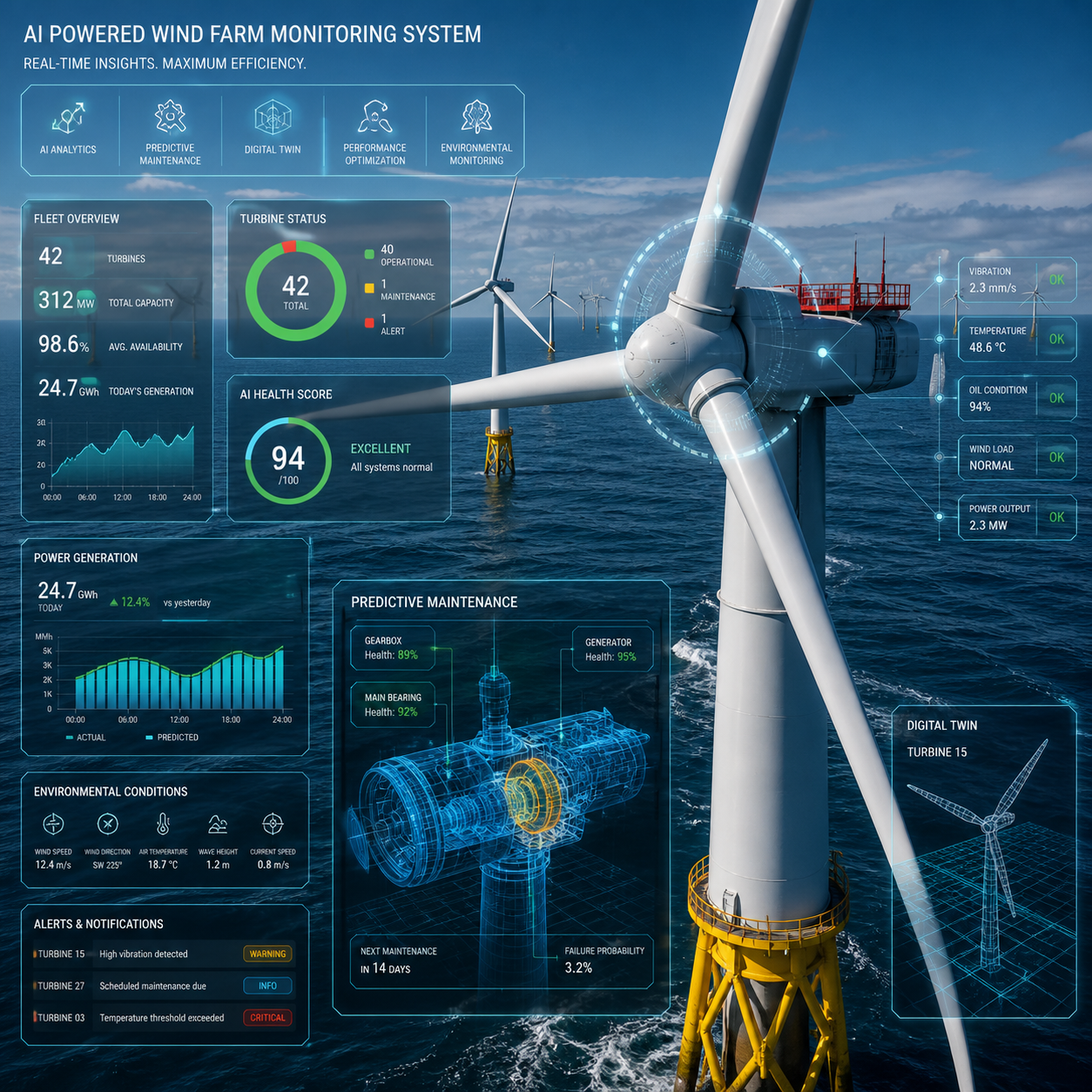
The next phase of offshore wind will likely emphasize larger turbines, coordinated offshore grids, recyclable materials, digital monitoring, and floating platforms for deep-water markets. The strongest projects will be those that match technology with seabed conditions, secure transmission early, and treat local consultation as part of engineering rather than a final administrative step.
Frequently Asked Questions
What is the largest offshore wind project in the world?
The answer depends on the metric and status. Dogger Bank is among the largest projects under construction, with a planned capacity of 3.6 gigawatts, while several Chinese developments and international project zones have comparable or greater planned capacity. A proposed or phased project should not be described as the largest operating wind farm without specifying the comparison.
How are offshore wind projects connected to the electricity grid?
Turbine-generated electricity moves through inter-array cables to an offshore substation, then travels through high-voltage export cables to an onshore substation and the national or regional transmission network.
What is the difference between fixed-bottom and floating offshore wind?
Fixed-bottom turbines are attached to the seabed and usually suit shallower waters. Floating turbines sit on buoyant platforms anchored by mooring lines, enabling development in deeper waters but requiring more complex platforms, cables, and maintenance systems.
How long does it take to develop an offshore wind farm?
A major offshore wind farm commonly requires several years for leasing, surveys, environmental review, permitting, contracting, financing, construction, and commissioning. Delays can extend the timeline when transmission, vessels, supply chains, or power contracts are unavailable.
What are the main challenges facing large offshore wind projects?
The main challenges are permitting, grid connection, construction costs, interest rates, supply-chain capacity, specialized vessels, marine-use conflicts, environmental assessment, and long-term operations and maintenance in harsh offshore conditions.