How to Reduce LCOE in Offshore Wind Projects

Reducing the levelized cost of energy (LCOE) in offshore wind requires decisions that improve the entire project lifecycle. Turbine price matters, but so do wind resource, capacity factor, foundations, installation, grid connection, financing, operations and maintenance (O&M), and the cost of retiring the asset.
The strongest projects use a whole-life approach: spend capital where it increases lifetime energy or reliability, remove avoidable construction delays, and allocate risk to the parties best positioned to manage it. Cutting upfront cost alone can increase downtime, financing risk, or decommissioning liabilities later.
What LCOE Means in Offshore Wind
Levelized Cost of Energy in offshore wind is the average cost of producing electricity over a wind farm’s entire life, expressed per unit of electricity generated. It combines lifetime expenditure, financing, project duration, and total energy output.
A simplified formulation is:
LCOE = discounted lifetime costs ÷ discounted lifetime electricity generation
Costs typically include development, engineering, procurement, construction, capital expenditure (CAPEX), financing, operating expenditure (OPEX), O&M, grid connection, and decommissioning. The denominator depends on installed capacity, turbine availability, wind conditions, wake losses, electrical losses, curtailment, and the project’s operating life.
This relationship creates two direct routes to lower LCOE:
- Reduce lifetime cost: lower CAPEX, OPEX, financing expense, delays, and unplanned repair costs.
- Increase useful generation: improve capacity factor, reliability, availability, layout efficiency, and grid delivery.
A project with cheaper equipment can still have a higher LCOE if it produces less energy or experiences more downtime. Conversely, a larger turbine or stronger foundation may raise CAPEX while lowering the cost per megawatt and increasing annual generation. The correct choice depends on site conditions, supply-chain readiness, risk, and the cost of capital.
For background on the broader energy-cost concept, the U.S. Department of Energy provides authoritative information on renewable-energy technologies and project economics.
The Main Cost Drivers of Offshore Wind
Offshore wind cost drivers span development, construction, operation, financing, grid connection, and decommissioning; no single equipment category determines LCOE across every offshore wind farm.
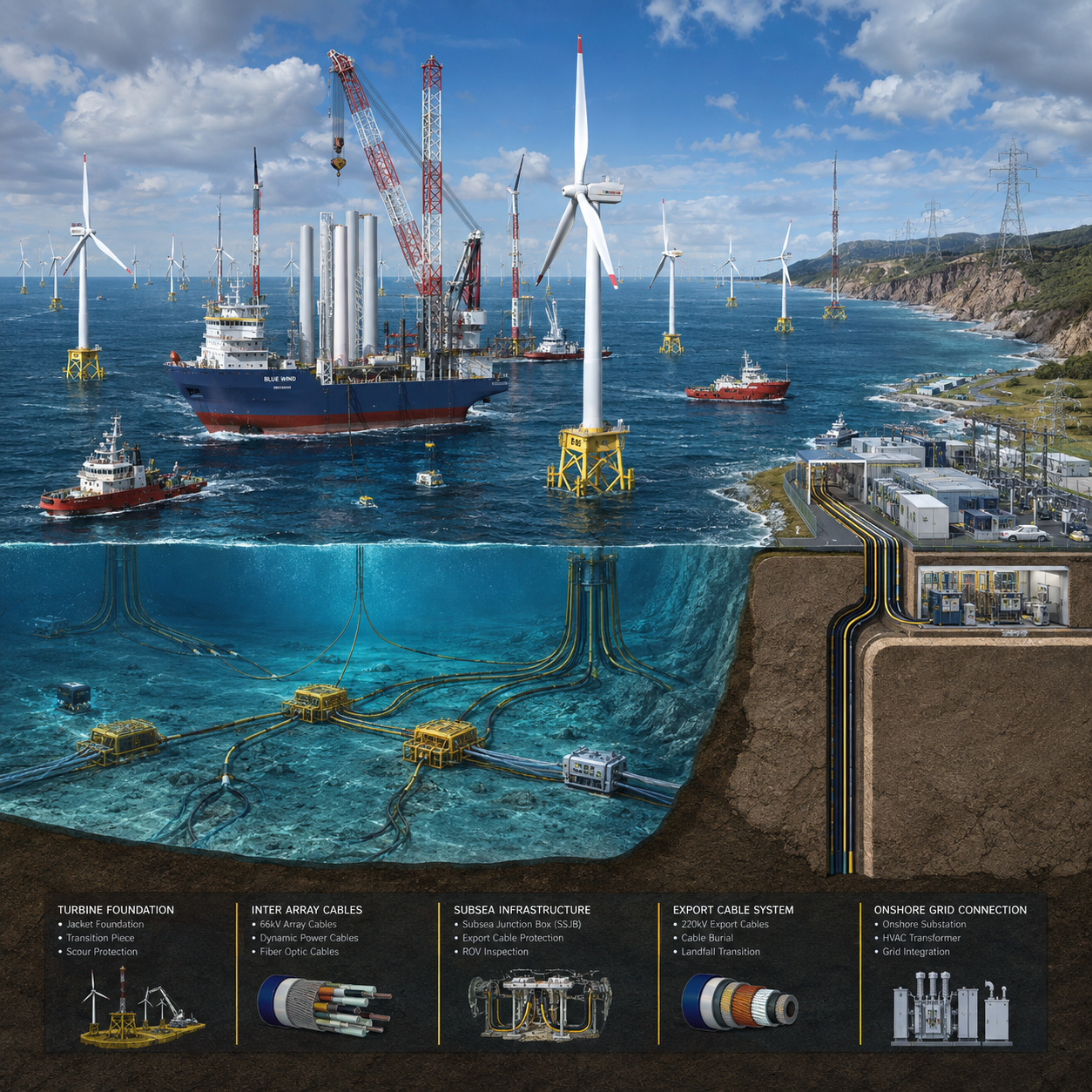
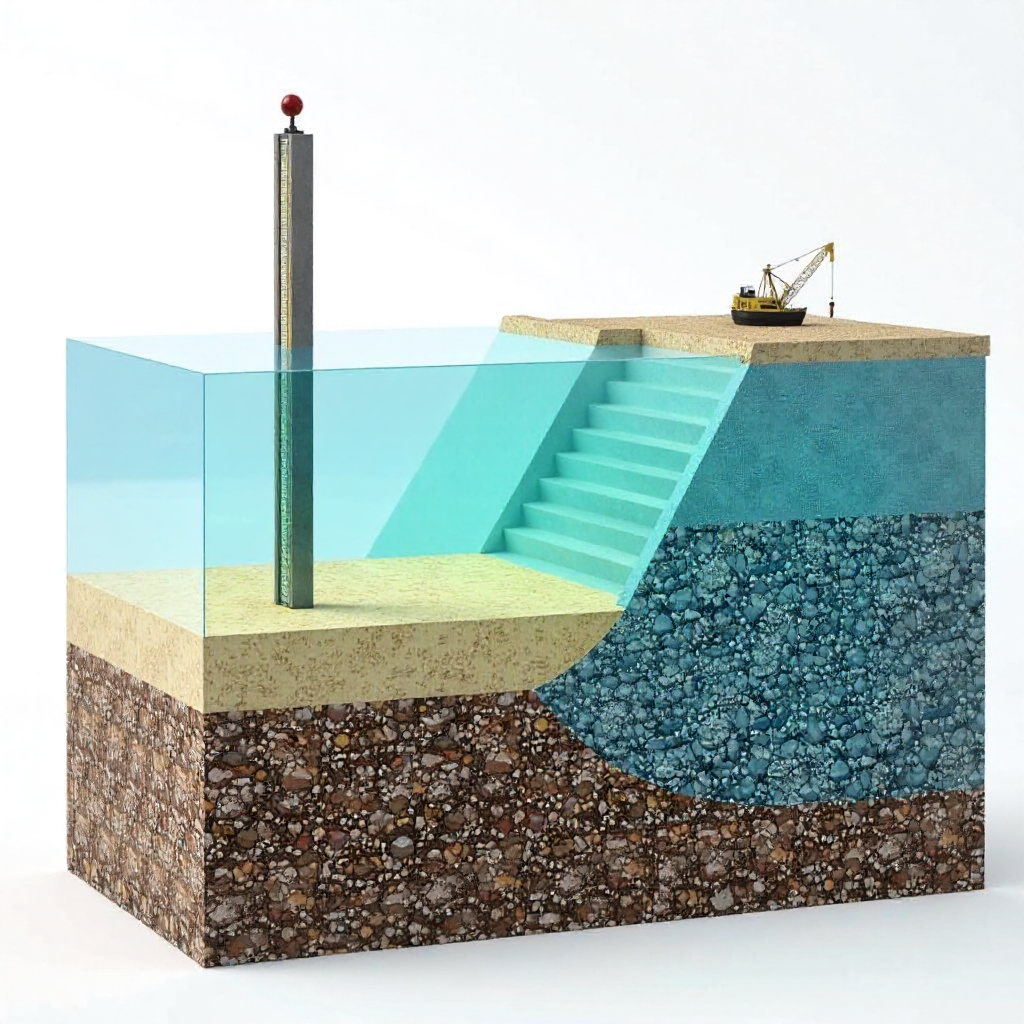
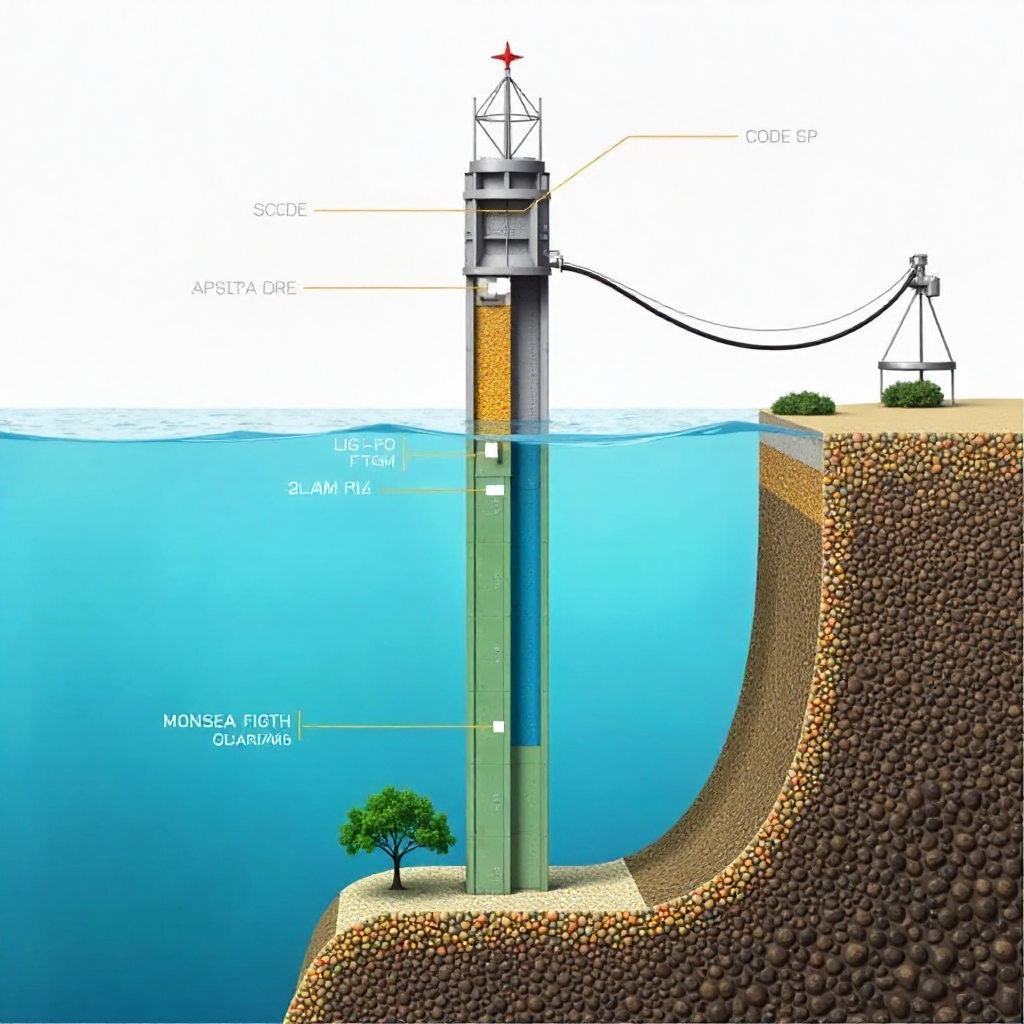
CAPEX commonly includes offshore wind turbines, foundations, array cables, export cables, substations, ports, vessels, construction management, surveys, consenting, and onshore grid infrastructure. Foundations and subsea infrastructure can become particularly significant in deep water, difficult seabed conditions, or sites exposed to demanding waves and currents.
Installation costs reflect vessel day rates, weather downtime, port distance, crane availability, offshore logistics, and the sequence in which components arrive. A delayed turbine installation can affect not only construction spending but also revenue, interest during construction, and the timing of power purchase obligations.
OPEX covers inspection, scheduled servicing, corrective repairs, vessel and helicopter access, insurance, lease payments, port operations, spare parts, control systems, and personnel. O&M costs rise when turbines are far from shore or when harsh weather restricts access.
Financing can magnify every other cost. Longer development or construction periods increase the time before revenue begins. Higher perceived technology, construction, offtake, or grid risk can raise the weighted average cost of capital, increasing the present value of future expenditure.
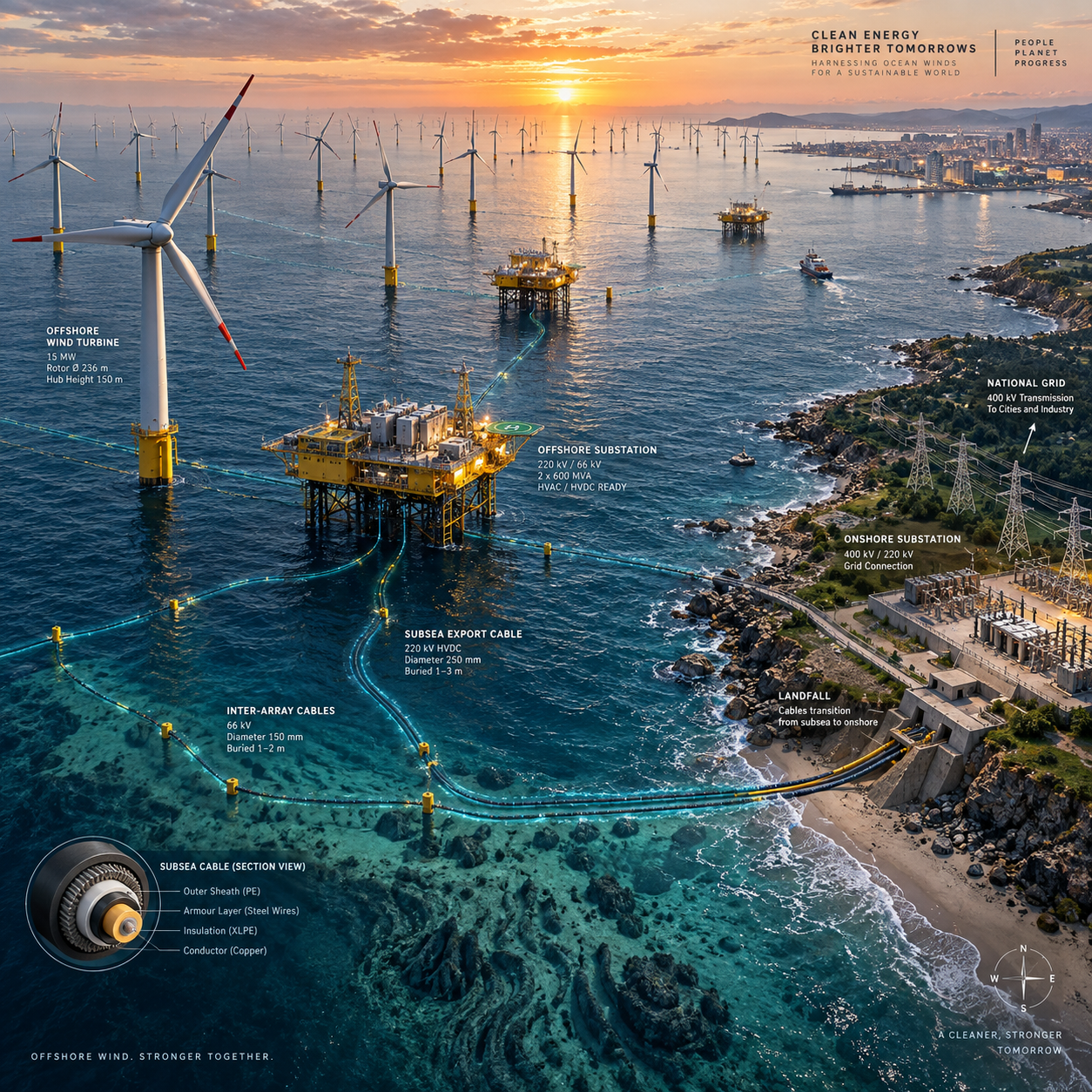
Grid connection deserves separate attention. Export cables, offshore substations, reactive-compensation equipment, onshore landing points, and network reinforcement can represent a major share of project CAPEX. Decommissioning also belongs in the original economic model, including removal, recycling, seabed restoration, and monitoring obligations.
Optimize Site Selection and Project Design
To reduce offshore wind LCOE through site selection, choose a location that balances strong wind resource with manageable water depth, seabed conditions, shore distance, construction access, and grid availability.
A high average wind speed is valuable because it can increase capacity factor, but wind data must be evaluated alongside turbulence, extreme weather, wave climate, and seasonal patterns. A site with excellent wind may become uneconomic if it requires complex foundations, long export cables, or extensive grid reinforcement.
Use a whole-site screening model
Early development should compare sites using a consistent model rather than ranking them by wind speed alone. Key inputs include:
- Wind speed distribution, turbulence intensity, and extreme wind conditions.
- Water depth, seabed geology, scour risk, and foundation installation requirements.
- Distance to shore, cable route length, landfall complexity, and grid capacity.
- Port capability, vessel access, weather windows, and nearby fabrication capacity.
- Environmental constraints, fishing activity, shipping lanes, aviation, and consenting risk.
Fixed-bottom foundations may be competitive in shallower water, while floating offshore wind can open deeper sites but adds mooring systems, dynamic cables, assembly requirements, and new maintenance challenges. The apparent advantage of a stronger wind resource must therefore be tested against the complete balance of CAPEX, OPEX, energy yield, and financing risk.
Good project design also limits unnecessary cable length, uses an efficient array layout, reserves realistic construction corridors, and coordinates the wind farm with the transmission network from the beginning. Moving a project closer to a grid connection may reduce export-cable cost, but it can also sacrifice wind quality or create greater environmental conflict.
Improve Turbine Performance and Energy Yield
Larger and better-performing offshore wind turbines can reduce LCOE by producing more electricity from each position, but the benefit depends on reliability, installation capability, component cost, and site suitability.
A turbine with a larger rotor can capture more energy, especially at sites with moderate wind speeds. Higher hub heights may also access stronger and more consistent winds. Fewer turbines can reduce the number of foundations, array cables, transition pieces, and turbine installation operations required for a given project capacity.
Those advantages come with trade-offs. Larger blades, generators, towers, and bearings can require heavier transport and installation equipment. Ports may need reinforced quays, larger storage areas, and new cranes. If a major component fails, the repair may demand a specialized vessel and a longer weather window.
Optimize for energy per installed position
Project teams should evaluate turbines using an integrated metric: lifetime energy per foundation and per offshore installation campaign. The analysis should include:
- Capacity factor: expected annual generation relative to maximum theoretical output.
- Availability and reliability of the turbine and balance-of-plant equipment.
- Wake effects caused by turbine spacing, prevailing wind direction, and array geometry.
- Electrical losses in array and export cables, plus expected curtailment.
- Compatibility with foundations, vessels, ports, cranes, and spare-parts systems.
Layout optimization can raise energy yield without changing the turbine model. Wider spacing may reduce wake losses, but it also increases cable length and seabed occupation. A compact layout can reduce infrastructure cost while sacrificing some generation. The best design is the one with the lowest whole-life cost per delivered megawatt-hour, not necessarily the lowest turbine purchase price.

Reduce Construction and Installation Costs
Construction and installation costs fall when offshore wind projects standardize components, reduce vessel time, coordinate procurement, and remove avoidable pauses between manufacturing, port staging, and offshore work.
Standardization improves repeatability. Reusing proven foundation concepts, cable designs, installation sequences, and quality procedures can reduce engineering effort and shorten learning curves across a portfolio. Modular designs may also allow components to be manufactured in parallel and assembled closer to the project site.
Vessel strategy is equally important. Installation campaigns should match turbine size and foundation type to suitable jack-up vessels, heavy-lift ships, cable-laying vessels, and support craft. A vessel that appears inexpensive on a daily-rate basis may become costly if it lacks the crane capacity, deck space, or weather tolerance required for the planned operation.
Port infrastructure can reduce handling and waiting time. Practical improvements include adequate quayside strength, storage capacity, blade and tower handling systems, pre-assembly space, customs planning, and direct access to fabrication facilities. In some projects, assembling major components at port reduces offshore lifts; in others, extra handling creates damage and schedule risk.
Coordinated procurement also matters. Early alignment between turbine suppliers, foundation fabricators, cable manufacturers, ports, and marine contractors helps identify interface risks before offshore work begins. Long-lead items should be ordered only after design maturity is sufficient to avoid expensive rework.
The central trade-off is speed versus flexibility. A highly standardized plan can reduce cost, but it may limit the ability to respond to late geotechnical findings, supplier changes, or vessel shortages. Robust contingency planning protects the LCOE model from schedule disruption.
Lower Lifetime O&M and Unplanned Downtime
Better O&M reduces offshore wind LCOE by increasing turbine availability, preventing major failures, shortening repair campaigns, and controlling recurring vessel, labor, and spare-parts costs.
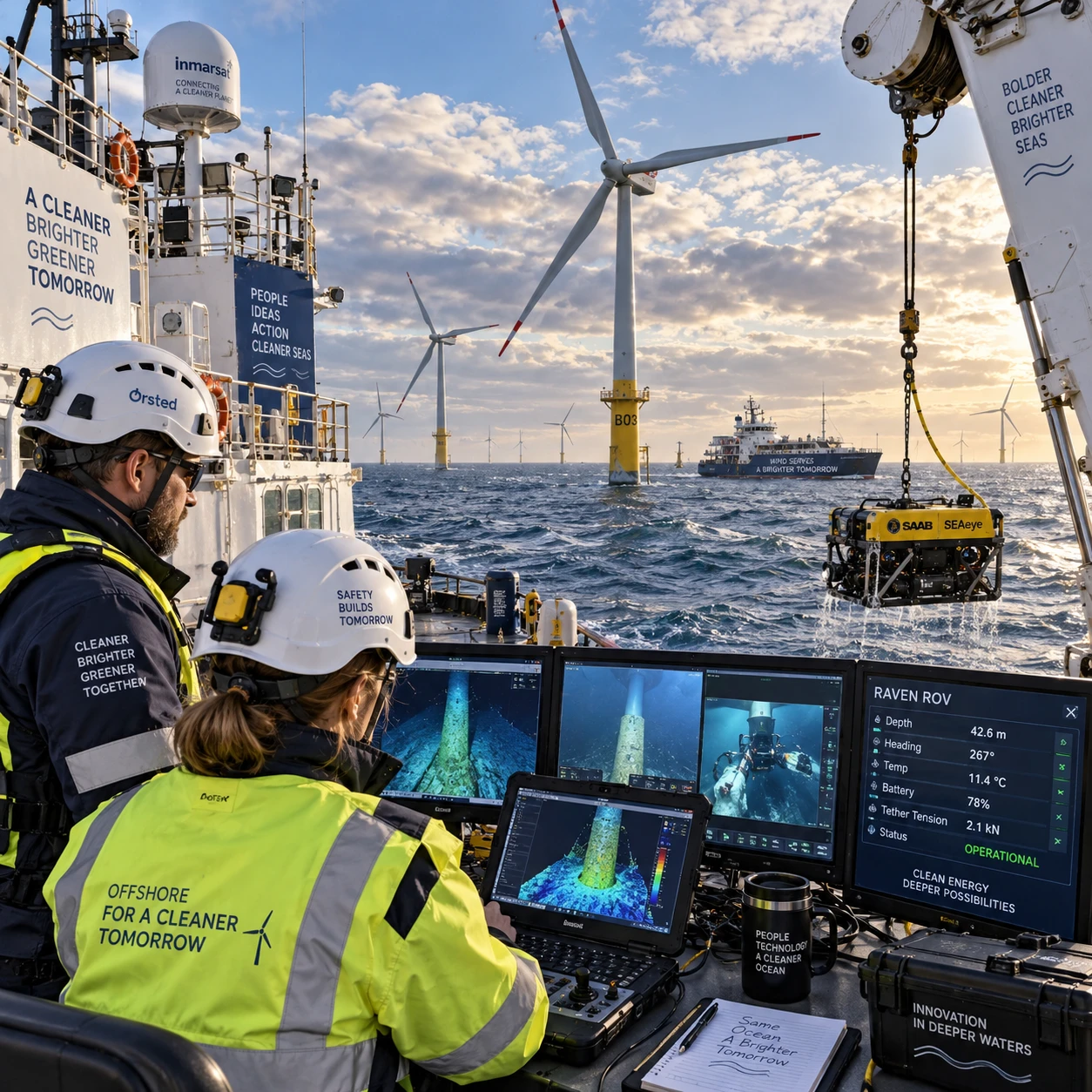
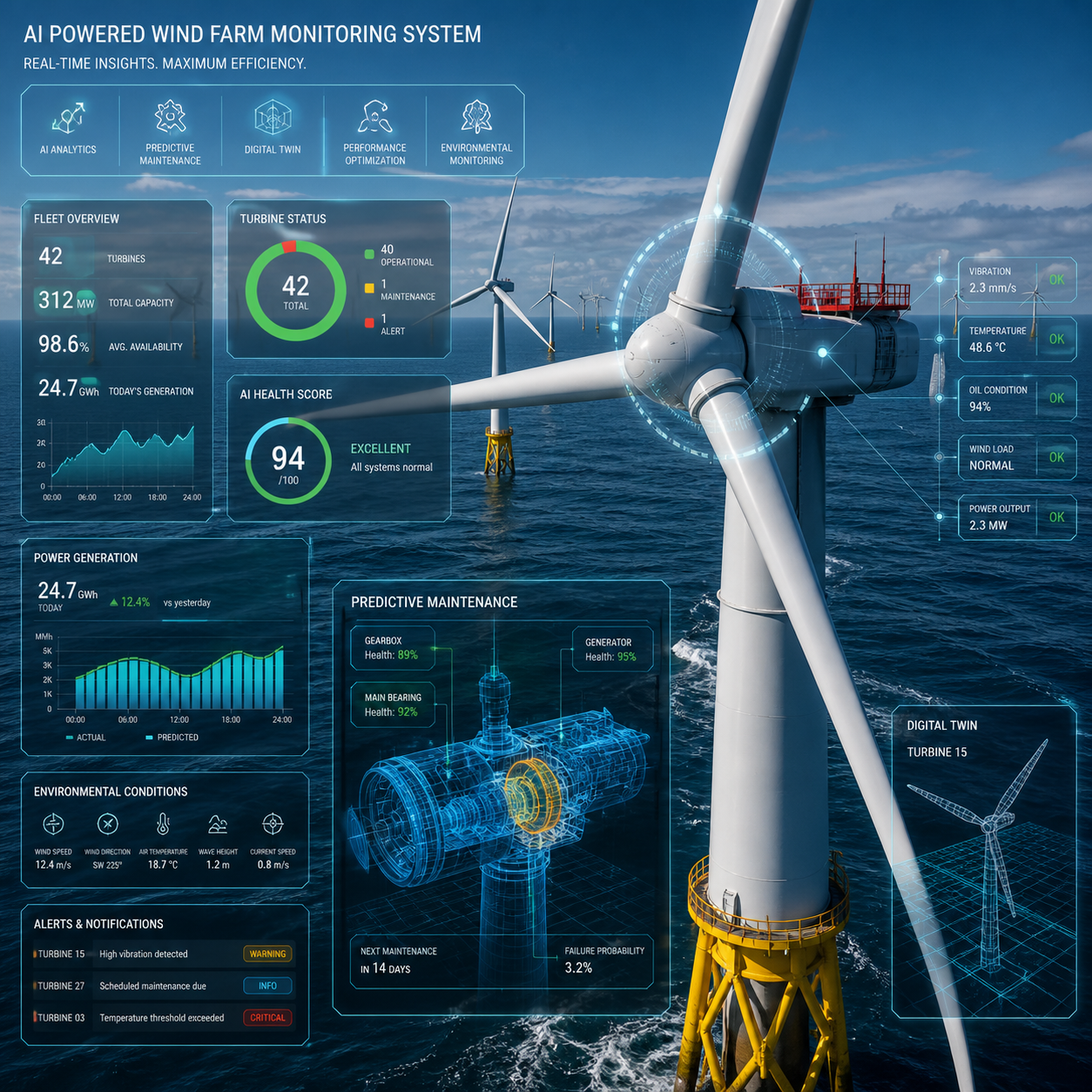
Condition monitoring systems can track vibration, temperature, lubrication, electrical behavior, and structural loads. When combined with inspection records and operational data, these systems support predictive maintenance: teams can plan an intervention before a minor defect becomes a gearbox, generator, blade, or cable failure.
Remote inspections using drones, cameras, and autonomous systems can reduce the number of routine technician transfers, especially for blades, towers, platforms, and substations. They do not eliminate the need for qualified personnel or physical repairs, but they can improve screening and help prioritize offshore visits.
Design the maintenance system before commissioning
Effective O&M planning begins during design. Developers should assess:
- Safe access through crew transfer vessels, service operation vessels, helicopters, or walk-to-work systems.
- Weather windows and the seasonal availability of each access method.
- Onshore and offshore spare-parts storage, including major-component strategy.
- Commonality of components across turbines and the availability of trained technicians.
- Emergency response, inspection intervals, cybersecurity, and safety procedures.
Centralizing maintenance at a nearby port can reduce transit time, while an offshore service operation vessel may improve access for distant wind farms. The vessel adds fixed and variable cost, so its value depends on distance, weather, failure rates, and the revenue lost during downtime.
Reliability improvements also require disciplined feedback. Failure data from operating turbines should influence component specifications, warranty terms, spare-parts inventories, and future procurement. A cheaper component that creates repeated downtime can increase LCOE more than a higher-quality alternative.
Strengthen Supply Chain, Financing, and Risk Management
Supply-chain resilience and lower financing risk support lower offshore wind LCOE by reducing delay exposure, improving price certainty, and giving lenders greater confidence in construction and operational performance.
Long-term procurement agreements can secure turbines, foundations, subsea cables, vessels, and port capacity before the market becomes constrained. However, early commitments can lock a project into prices or specifications that later prove unsuitable. Contracts should include clear technical interfaces, quality requirements, delivery milestones, change mechanisms, and remedies for delay.
Developing local supply-chain capability can shorten logistics routes and support permitting or political objectives. It may also raise near-term cost if a new facility lacks scale or experience. The economic test should include quality, schedule reliability, transport, workforce availability, and the value of future reuse across multiple offshore wind farms.
Contracting structure determines how risk is shared. Fixed-price engineering, procurement, and construction arrangements may improve cost certainty, but contractors usually price transferred risks and may retain less flexibility during unexpected events. Split packages can create competition and specialist expertise, yet they increase interface-management responsibility for the developer.
Financing benefits from credible assumptions, mature design, bankable warranties, firm grid arrangements, strong offtake contracts, and transparent contingency allowances. A lower interest rate can materially improve LCOE, but lenders will not treat optimistic projections as risk reduction. Independent resource assessment, geotechnical surveys, construction schedules, and sensitivity analysis make the business case more credible.
A useful decision test is the cost-risk-yield triangle: every major option should be assessed for its effect on cost, probability of disruption, and lifetime energy. A low-CAPEX choice that increases failure probability or delays revenue may be inferior to a more expensive option with stronger availability and financing terms.
Frequently Asked Questions About Offshore Wind LCOE
What is LCOE in offshore wind?
LCOE in offshore wind is the discounted lifetime cost of developing, building, financing, operating, maintaining, connecting, and retiring a wind farm divided by its discounted lifetime electricity generation.
Which offshore wind costs have the greatest impact on LCOE?
The largest influences commonly include turbine and foundation CAPEX, installation, subsea infrastructure, grid connection, financing, O&M, and lost revenue from downtime. Their relative importance varies by site, technology, project size, and market conditions.
How do larger turbines affect offshore wind LCOE?
Larger turbines can increase energy yield and reduce the number of foundations and array connections needed for a project. They can also increase component, vessel, port, transport, reliability, and repair requirements, so their impact must be evaluated for the specific site and supply chain.
Can better O&M reduce LCOE after a wind farm is operational?
Yes. Condition monitoring, predictive maintenance, reliable components, effective access strategies, remote inspections, and planned spare-parts inventories can reduce unplanned downtime and recurring O&M costs. Savings depend on execution and should be balanced against monitoring and service-system costs.
How does project financing influence offshore wind LCOE?
Financing affects the discounted value of CAPEX, construction expenditure, and future O&M. Longer schedules, uncertain technology, weak offtake arrangements, or unclear grid responsibility can raise the cost of capital and increase LCOE even when physical construction costs remain unchanged.
The highest-impact LCOE reductions usually come from combining several decisions: select a site with strong wind and practical infrastructure, design for energy yield and constructability, standardize installation, protect reliability, and secure realistic financing and supply-chain capacity. Offshore wind economics improve when every choice is judged against delivered lifetime electricity rather than its first invoice.