Monopile vs. Jacket Foundations for Offshore Wind: A Practical Comparison of Pros and Cons

Foundation selection is one of the most consequential decisions in offshore wind project development. Get it right and you reduce LCOE, simplify logistics, and keep your project on schedule. Get it wrong and you're looking at cost overruns, structural challenges, or a mismatch between your turbine's load requirements and the seabed beneath it. This comparison cuts through the generalities to give engineers, project developers, and policy stakeholders a clear picture of where each foundation type performs — and where it doesn't.

What Are Monopile and Jacket Foundations?

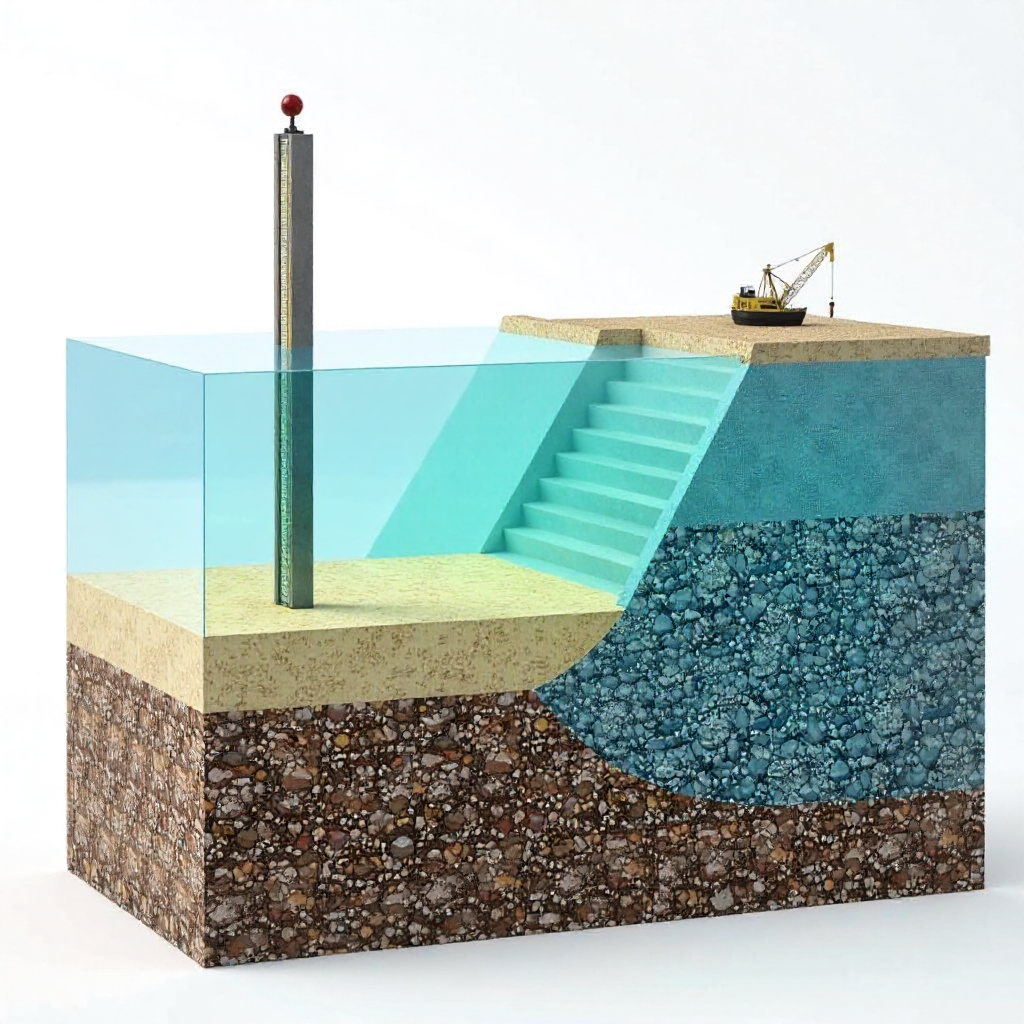
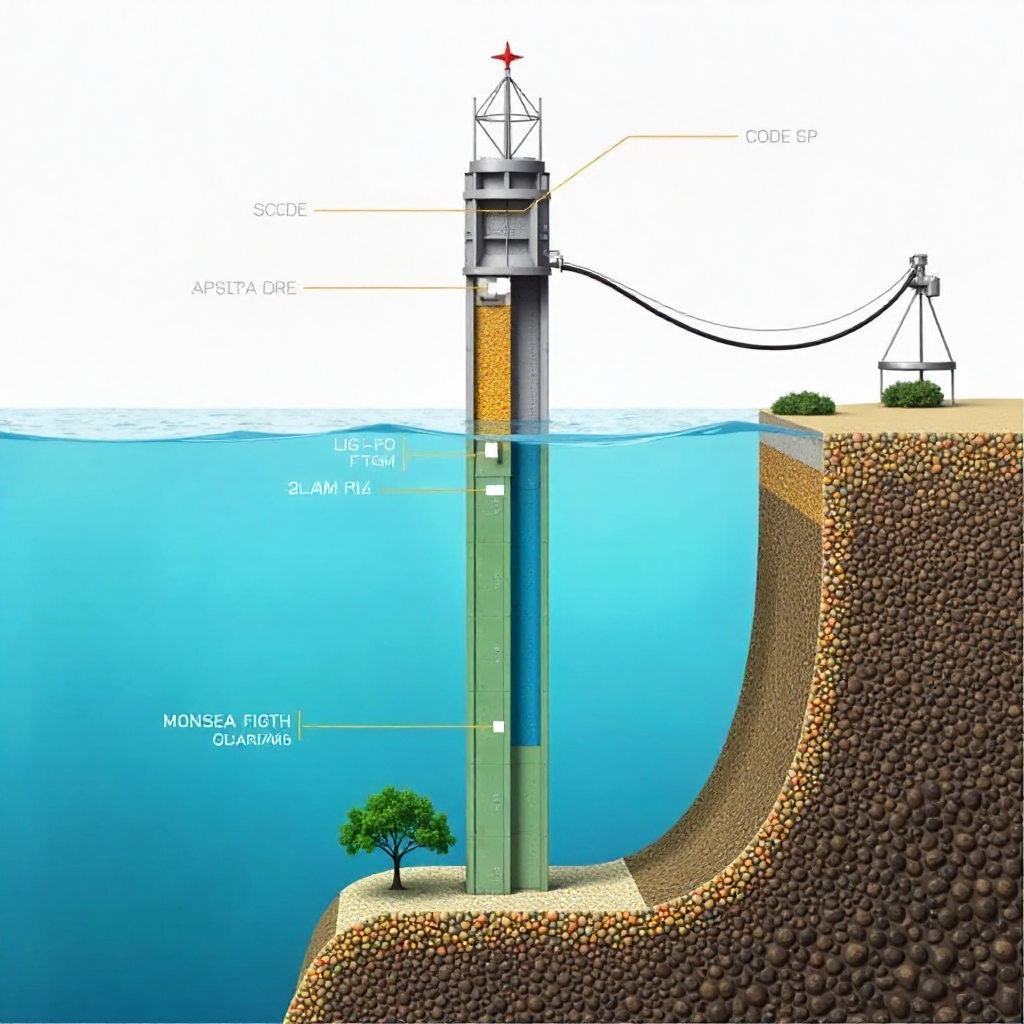
A monopile foundation is a single large-diameter steel tube driven directly into the seabed, while a jacket foundation is a multi-legged lattice structure anchored to the seabed via piles at each leg. Both serve the same fundamental purpose: transferring the enormous static and dynamic loads from an offshore wind turbine down into stable ground.

Monopiles currently dominate the offshore wind market, accounting for roughly 80% of all installed bottom-fixed foundations globally. Their appeal is straightforward — they're relatively simple to manufacture, quick to install, and well-understood by the supply chain. A transition piece sits atop the monopile, providing the interface between the steel tube and the turbine tower above.

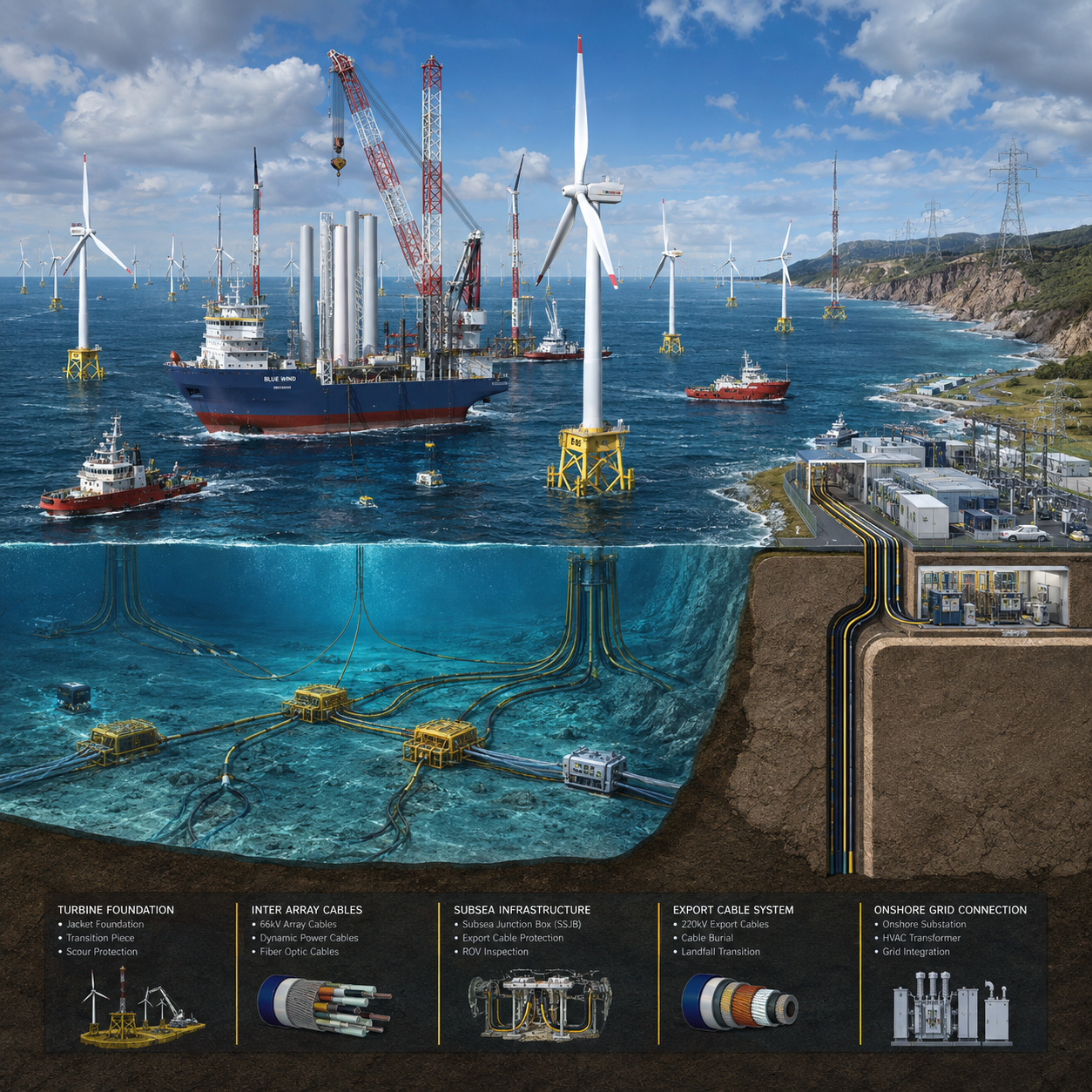
Jacket foundations, by contrast, look like scaled-up versions of oil and gas platform legs. Their three- or four-legged geometry distributes loads across a wider footprint, which is exactly why they become attractive when site conditions push beyond what a monopile can handle efficiently. The fabrication is more complex, but the structural logic is sound for the environments where they're deployed.

Water Depth and Seabed Suitability

Water depth is the single most important variable in foundation selection. Monopiles are generally cost-effective in water depths up to around 30–35 meters, while jacket foundations become the practical choice from roughly 40 meters and beyond — though the crossover point depends heavily on soil conditions and turbine size.

In shallow water with uniform sandy seabeds — the classic North Sea profile — monopiles are hard to beat. The pile can be driven efficiently, and the relatively simple loading environment plays to the monopile's structural strengths. Soft clays, layered soils, or highly variable seabed geology complicate things. A monopile in poor soil may require a diameter so large that fabrication and installation costs climb steeply.

Jacket foundations tolerate seabed complexity better. Because each leg pile can be positioned and angled independently, the structure adapts to uneven terrain or mixed soil profiles. Rocky seabeds that resist pile driving can be addressed with suction caissons or grouted connections at each leg — options that are more practical with a jacket's distributed footprint than with a single monopile.

The practical depth ranges look roughly like this:

  • Monopile: 5–35 m water depth, uniform sandy or silty seabeds, moderate wave loading
  • Jacket: 30–60 m water depth, complex or rocky seabeds, high wave and current exposure
  • Overlap zone (30–40 m): Site-specific analysis required; turbine capacity and local soil data often decide the outcome

Cost, Manufacturing, and Installation Complexity

Monopiles are cheaper to manufacture and install when site conditions suit them — a single steel tube requires less fabrication time and fewer components than a jacket's welded lattice. Jacket foundations carry higher capital costs per unit but can reduce total project risk in challenging environments where a monopile would struggle.

Manufacturing a large-diameter monopile — modern XL variants now exceed 10 meters in diameter — demands specialized rolling and welding equipment. Only a handful of European fabricators can handle the largest sizes, which creates supply chain bottlenecks for projects using very large turbines. Jackets involve more welds and more components, but the individual pieces are smaller, meaning fabrication can be distributed across a wider supplier base.

Installation vessel requirements differ significantly. Monopile installation typically uses a large hydraulic impact hammer mounted on a jack-up vessel. The operation is relatively fast — a single pile, a single lift, driven in hours. Jacket installation requires a heavy-lift crane vessel to position the structure, then separate pile-driving operations at each leg. Weather windows matter more, and the overall offshore campaign takes longer per foundation.

A realistic cost comparison has to account for the full picture: fabrication, transport, installation vessel day rates, and any seabed preparation. In water depths below 30 meters, monopiles typically deliver a lower installed cost per foundation. Beyond 40 meters, the jacket's structural efficiency often offsets its higher fabrication cost by avoiding the extreme steel tonnage an equivalent monopile would require.

Structural Performance and Load Management

Both foundation types must withstand decades of fatigue loading from waves, wind, and rotor-induced vibrations — but they handle these dynamic loads through fundamentally different structural mechanisms.

Monopiles behave as cantilever beams. The entire lateral load from the turbine and wave action is resisted by the pile's bending stiffness and the surrounding soil. This creates high bending moments at the mudline — the point where the pile meets the seabed — which is the critical fatigue location. As turbines grow larger and heavier, the bending moments increase, driving up the required pile diameter and wall thickness.

Jacket foundations convert lateral loads into axial forces distributed across multiple piles. This is structurally more efficient for high-load environments because steel is much stronger in tension and compression than in bending. The trade-off is that the many welded joints in a jacket structure are themselves fatigue-sensitive. Each node — where braces meet the main legs — requires careful design and inspection to prevent crack initiation over a 25–30 year service life.

Damping behavior also differs. Monopiles have relatively low inherent damping, which can lead to resonance issues if the turbine's operational frequency aligns with the structure's natural frequency. Designers work around this through careful tuning of pile geometry, but it remains a constraint. Jacket structures tend to have higher natural frequencies and different modal behavior, which can actually simplify the frequency-avoidance challenge for very large turbines.

Innovation Potential and TRL Considerations

Monopile technology sits at high TRL levels (typically TRL 8–9) for standard applications, meaning most incremental improvements are refinements rather than breakthroughs. Jacket foundations occupy a slightly broader TRL range — mature for conventional designs, but with active innovation at TRL 4–7 for novel geometries and installation methods.

This distinction matters for funding. Programs like DemoWind ERA-NET focus on demonstration-stage technologies — projects that bridge the gap between laboratory or prototype validation and full commercial deployment. A novel monopile installation method or an optimized XL monopile design targeting cost reduction might qualify if it genuinely advances the state of practice. Jacket innovations — twisted jacket concepts, standardized modular designs, new grouted connection systems — often sit squarely in the TRL 5–7 range that demonstration funding is designed to support.

The key question for funding eligibility isn't which foundation type you're using, but whether your specific innovation represents a meaningful step up the TRL ladder. A conventional jacket in a new water depth isn't fundable; a jacket with a novel self-installing mechanism that eliminates the need for a heavy-lift vessel might be. DemoWind ERA-NET's mission — reducing the levelized cost of energy from offshore wind through demonstrated technology — applies equally to both foundation categories when genuine innovation is present.

When to Choose Monopile vs. Jacket — Decision Factors

The right foundation depends on a combination of site conditions, project economics, and supply chain realities — there's no universal winner. A structured decision framework helps cut through the variables.

Start with water depth and soil data. If you're below 30 meters with uniform sandy soil, the monopile case is strong unless turbine capacity pushes bending moments to impractical levels. Above 40 meters, or with complex seabed geology, begin your jacket analysis. In the 30–40 meter overlap zone, run both options through a preliminary cost model before committing.

Then layer in logistics. What installation vessels are available in your region? If heavy-lift crane vessels are scarce or expensive, a monopile-dominant design reduces your exposure to vessel market volatility. If your port infrastructure can handle large-diameter steel tubes, monopile fabrication and transport may be straightforward. If not, a jacket's smaller individual components might actually simplify port operations.

Consider the turbine rating. Modern 15–20 MW turbines generate rotor thrust loads that stress monopile designs at the upper end of their practical range. A jacket's load distribution may offer better long-term structural confidence for the largest machines, particularly in exposed, high-energy sites.

  • Choose monopile when: water depth <35 m, uniform sandy seabed, standard turbine ratings, established local supply chain
  • Choose jacket when: water depth >40 m, complex or rocky seabed, very large turbines (>15 MW), high fatigue loading environment
  • Run site-specific analysis when: depth is 30–40 m, turbine rating is borderline, or soil data is incomplete

Future Outlook — Convergence, Hybrids, and Cost Reduction Trends

The boundary between monopile and jacket technology is blurring. XL monopiles now reach diameters and depths that were considered jacket territory a decade ago, while next-generation jacket concepts are being redesigned for faster, cheaper installation — historically a monopile advantage.

Several trends are reshaping the competitive landscape. Self-installing jacket concepts — structures that use suction caissons instead of driven piles, eliminating the need for heavy-lift vessels — could significantly reduce jacket installation costs and make them viable in more project contexts. On the monopile side, improved driving equipment and optimized pile geometries are extending the practical depth range without proportional cost increases.

Both foundation categories are under pressure from the same force: the industry's relentless focus on LCOE reduction. As offshore wind scales up and moves into deeper, more exposed waters, neither technology can afford to stand still. Demonstration programs, including those supported by DemoWind ERA-NET, are actively funding the innovations — in materials, installation methods, and structural design — that will determine which foundation types dominate the next generation of offshore wind development.

The most likely outcome isn't one type replacing the other, but a more refined segmentation: monopiles optimized for the vast shallow-water pipeline, jackets refined for deeper and more complex sites, and hybrid or novel concepts emerging for the frontier conditions that neither handles well today.

Frequently Asked Questions

At what water depth does a jacket foundation become preferable to a monopile?

Jacket foundations typically become preferable above 40 meters water depth, though the crossover depends on soil conditions and turbine size. In the 30–40 meter range, a site-specific cost and structural analysis is necessary before committing to either type.

Which foundation type is cheaper to install overall?

Monopiles are generally cheaper to install in shallow water with suitable soil conditions, primarily because they require fewer offshore lifts and simpler vessel operations. Jacket foundations carry higher per-unit installation costs but can be more economical at depth by avoiding the extreme steel tonnage required for an equivalent monopile.

How do monopile and jacket foundations differ in terms of maintenance access?

Jacket foundations offer better physical access for inspection and maintenance — technicians can access the structure at multiple elevations using the lattice framework itself. Monopiles, being smooth cylindrical tubes, require boat landing systems and dedicated access platforms for above-water maintenance, while subsea inspection relies entirely on divers or ROVs.

Can jacket foundations be used in floating offshore wind applications?

Standard jacket foundations are bottom-fixed structures and are not used in floating offshore wind. However, jacket-inspired geometries do appear in some semi-submersible floating platform designs, where the lattice concept is adapted for buoyancy rather than seabed anchoring. These are distinct technologies from conventional jacket foundations.

How does foundation choice affect eligibility for innovation funding programs like DemoWind?

Foundation type alone doesn't determine funding eligibility — the novelty and TRL level of the specific innovation does. DemoWind ERA-NET supports demonstration-stage technologies in both foundation categories. A project using a conventional monopile in a standard application would not qualify, but a novel installation method, optimized design for very large turbines, or a new structural concept targeting LCOE reduction could be eligible regardless of whether it involves a monopile or jacket.

{{HOMEPAGE_LINKS}}